You Won’t Believe What I Saw in Granada
Granada, Spain, is more than just a city—it’s a sensory journey. Wandering through narrow cobblestone streets, I stumbled upon views that stopped me cold: the Alhambra glowing at golden hour, hidden courtyards blooming with jasmine, and sunsets over the Sierra Nevada that felt almost unreal. Each vantage point told a story. This isn’t just sightseeing—it’s discovery in its purest form. Here’s how to truly *see* Granada.
The Magic of First Sight: Arriving in Granada
Approaching Granada from the east, the city unfolds like a layered tapestry woven into the foothills of the Sierra Nevada. The first glimpse of the Alhambra, perched majestically above the urban sprawl, often catches visitors by surprise. Its red-tiled towers and sandstone walls rise gently against the mountain backdrop, catching the morning light in a soft, warm hue. Unlike many European cities that reveal themselves gradually, Granada announces its presence with quiet confidence. There’s no grand highway entrance or towering sign—just the sudden, breathtaking realization that you’ve entered a place where history and landscape are inseparable.
The city’s topography plays a crucial role in shaping the visitor’s experience. Built on a series of rolling hills along the Darro River, Granada naturally funnels foot traffic upward, guiding explorers toward elevated viewpoints without them even realizing it. Streets slope gently, staircases appear unexpectedly, and alleys open into small plazas with panoramic vistas. This organic layout encourages slow, intentional movement—ideal for travelers who appreciate the journey as much as the destination. Even a simple walk from the train station to the city center becomes a visual prelude to what lies ahead.
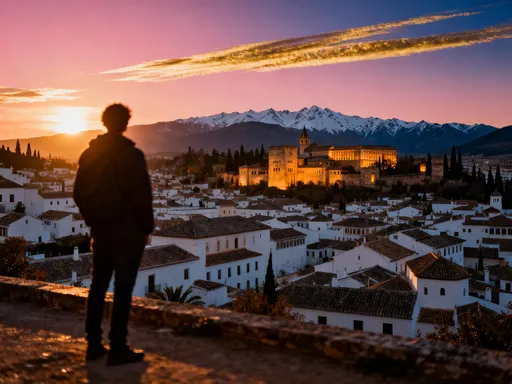
One of the most iconic first experiences in Granada is witnessing the sunset from Mirador de San Nicolás. Located in the heart of the Albaicín neighborhood, this public terrace has become synonymous with the city’s postcard image: the Alhambra illuminated in golden light, framed by cypress trees and the deepening colors of the evening sky. While crowds gather here nightly, the view remains undeniably powerful. What makes it more than just a photo opportunity is the atmosphere—the hushed awe, the strum of a distant guitar, the scent of evening herbs carried on the breeze. It’s a moment where time seems to pause, allowing even the most seasoned traveler to feel a sense of wonder.
Visiting Mirador de San Nicolás at sunset requires no special planning beyond arriving 30 to 45 minutes before dusk. The site is easily accessible on foot from central Granada, though the climb involves narrow, uneven streets typical of the historic district. Comfortable shoes are essential, as are a light jacket and a bit of patience when navigating the popular spot. While vendors sell drinks and snacks, bringing your own water is advisable. Importantly, visitors are encouraged to respect the residential nature of the area—keeping noise levels low and avoiding intrusive behavior toward local residents. The beauty of the mirador lies not just in what you see, but in how you engage with it.
Alhambra: More Than a Monument—A Living Canvas
The Alhambra is not merely a palace or fortress—it is a living canvas where architecture, nature, and light converge in a continuous dance. As one of Spain’s most visited historical sites, it draws millions each year, yet few take the time to observe how its character shifts throughout the day. At sunrise, the complex emerges from shadow like a mirage, its walls slowly warming under the first rays. By mid-morning, sunlight filters through orange groves in the Generalife gardens, casting intricate patterns on tiled fountains. In the afternoon, the reflections in the still pools of the Court of the Lions create a dreamlike symmetry. And at dusk, when the sun dips behind the Sierra Nevada, the entire structure glows in a deep amber, as if lit from within.
Timing your visit can dramatically alter your perception of the Alhambra. Early morning hours, typically between 8:00 and 10:00 a.m., offer the clearest light and the fewest crowds. This is the ideal window to explore the Nasrid Palaces, where delicate stucco work and carved wooden ceilings are best appreciated in natural illumination. The intricate arabesques and calligraphic inscriptions seem to come alive under soft daylight, revealing details that artificial lighting cannot replicate. Security protocols require timed entry tickets for the palaces, so advance booking—often months ahead during peak seasons—is essential.
Equally powerful is viewing the Alhambra from a distance. While many focus on touring the interior, standing across the ravine in the Albaicín offers a different kind of reverence. From vantage points like Mirador de San Nicolás or quieter spots along Calle Aljibe, the full silhouette of the complex unfolds against the mountain range. This external perspective emphasizes its strategic placement and harmonious integration with the landscape. At night, when the monument is softly lit, the effect is even more striking—floating above the city like a lantern from another era.
The emotional impact of seeing the Alhambra extends beyond aesthetics. For many, it evokes a deep sense of historical continuity. Built primarily during the 13th and 14th centuries under Nasrid rule, the site bears witness to a period of remarkable cultural coexistence in medieval Spain. The fusion of Islamic art with later Christian additions tells a layered story of conquest, adaptation, and resilience. Walking through the Hall of the Ambassadors or gazing at the reflecting pools of the Generalife, one doesn’t just observe history—they feel it. This emotional resonance is what transforms a visit from a checklist item into a meaningful experience.
Hidden Terraces and Secret Corners
Beyond the well-trodden paths of the Albaicín lies a network of hidden terraces and intimate plazas that offer a more personal connection to Granada’s beauty. These spaces are not always marked on maps, nor do they attract tour groups, but they reward the curious traveler with unobstructed views and moments of quiet reflection. In neighborhoods like Realejo and Sacromonte, winding alleys lead to unexpected openings—small courtyards with flowering bougainvillea, rooftop patios with linen drying in the sun, or stone benches overlooking the Darro Valley.
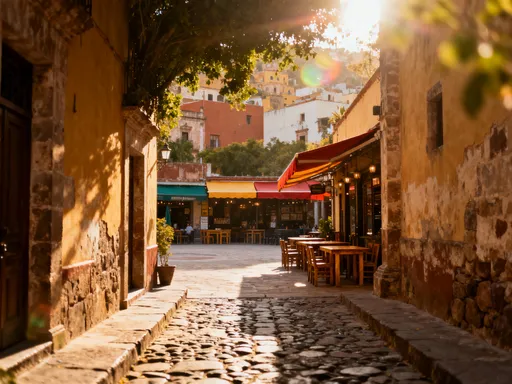
One such discovery might be Plaza Larga, a long, narrow square tucked away in the Albaicín. Far less crowded than San Nicolás, it functions as a local gathering place where neighbors chat over coffee and children play under shaded arches. Yet, from certain angles, the Alhambra appears framed perfectly between whitewashed buildings, creating a spontaneous postcard moment. Cafés line the edges, offering outdoor seating that invites lingering. It’s the kind of place where time slows, and the rhythm of daily life becomes part of the scenery.
Another gem is the Mirador de los Carvajales, slightly off the main tourist trail but accessible via a scenic walk from the Alhambra. This viewpoint offers a sweeping panorama of the Albaicín’s terracotta rooftops cascading down the hillside, with the Alhambra rising in the distance. Unlike the crowded San Nicolás, it often remains peaceful, allowing for uninterrupted contemplation. Early evening is particularly beautiful here, as golden light bathes the old quarter and the first lights flicker on in homes.
Exploring these hidden corners requires a respectful approach. Many of the best views are found within residential zones, where privacy should be honored. Visitors are advised not to enter private courtyards unless invited, avoid loud conversations, and refrain from photographing residents without permission. The charm of these spaces lies in their authenticity—they are not staged for tourism but lived in daily. By moving quietly and observing with humility, travelers can experience Granada as a living city rather than a museum exhibit.
Sunrise Over the Sierra Nevada: A Quiet Revelation
While sunsets in Granada are celebrated, sunrises remain a quiet revelation, witnessed by only a fraction of visitors. Rising before dawn to reach Mirador de San Cristóbal offers a profoundly different experience—one defined by stillness, soft light, and a sense of renewal. Located at a higher elevation than San Nicolás, this viewpoint looks westward across the city, positioning the Sierra Nevada directly behind the viewer at sunrise. As the first light crests the eastern peaks, it spills across the valley, gradually illuminating the Alhambra and awakening the city below.
The transformation is gradual and mesmerizing. At first, the mountains appear as dark silhouettes, their snow-capped ridges catching the earliest glow. Then, the sky shifts from indigo to lavender, then to soft peach and gold. By the time the sun fully emerges, the entire landscape is bathed in a cool, clear light that enhances depth and texture. The contrast between the warm hues of the city’s rooftops and the cool tones of the distant peaks creates a visual harmony that feels almost meditative.
Reaching Mirador de San Cristóbal before sunrise requires planning but is well within reach for most travelers. The walk from central Granada takes about 30 to 40 minutes, depending on starting point and pace. The route follows well-marked paths through the Albaicín, though some sections are steep and uneven. A flashlight or phone light is helpful in the darker stretches, and wearing layers is recommended, as mornings can be chilly even in summer. Despite the effort, the rewards are immense—not just in the view, but in the sense of having witnessed something rare and fleeting.
What makes this experience particularly special is the absence of crowds. Unlike the bustling evening gatherings at San Nicolás, sunrise at San Cristóbal is often shared with only a handful of photographers, early risers, and the occasional local walking their dog. This solitude fosters introspection and a deeper appreciation for the natural beauty surrounding Granada. It’s a reminder that some of the most powerful travel moments come not from grand events, but from quiet presence.
Perspectives from Daily Life: Cafés, Rooftops, and Local Eyes
Some of the most memorable views in Granada are not found in guidebooks, but in the rhythm of everyday life. A simple café with a balcony, a quiet bench in a neighborhood park, or a friend’s rooftop terrace can offer perspectives just as moving as any official mirador. These moments are unplanned, unfiltered, and deeply human. They reveal how locals live alongside beauty—not as a spectacle, but as a constant companion.
In the Realejo district, one of the city’s oldest neighborhoods, small family-run cafés often have upper-level seating with partial views of the Alhambra. Sitting with a cup of coffee and a churro, watching sunlight shift across the palace walls, becomes a ritual of stillness. Children walk to school, shopkeepers raise their metal shutters, and neighbors exchange greetings—all against a backdrop of timeless architecture. These scenes don’t demand attention; they simply exist, inviting the observer to pause and absorb.
Rooftop terraces, especially in restored historic homes, offer another intimate lens. Some boutique hotels and private residences open their rooftops to guests, providing a private vantage point away from tourist circuits. From here, the city unfolds in layers—red-tiled roofs, church spires, laundry lines swaying in the wind, and the ever-present silhouette of the Alhambra. At dusk, when the city lights begin to twinkle, the atmosphere turns poetic, blending comfort and wonder.
Engaging with Granada through local eyes encourages a slower, more thoughtful form of travel. Rather than rushing from landmark to landmark, this approach values presence over productivity. It means staying in one place long enough to see how light changes, how people move through space, how the city breathes. It’s in these ordinary moments that the soul of Granada becomes most visible—not in postcards, but in lived experience.
Seasonal Shifts: How Time Changes the View
Granada’s visual character evolves dramatically with the seasons, offering return visitors a fresh perspective each time. In spring, the city bursts into color—jasmine climbs stone walls, orange trees bloom in patios, and wildflowers dot the hillsides. The air carries a soft fragrance, and daylight lingers longer, encouraging outdoor exploration. This is an ideal time to visit the Generalife gardens, where fountains flow freely and shaded walkways offer relief from the warming sun.
Summer brings intense light and long days. The sun rises early and sets late, casting sharp contrasts between shadow and illumination. While temperatures can be high in the city center, the proximity to the Sierra Nevada provides escape. Day trips to mountain villages like Capileira or徒步 trails in the national park offer cooler air and stunning alpine scenery. Even within Granada, early mornings and evenings remain pleasant, making sunrise and sunset viewings especially rewarding.
Autumn softens the landscape. The harsh glare of summer gives way to golden light that enhances the city’s warm tones. Foliage in parks and gardens shifts to amber and rust, and the air gains a crisp clarity. This season is particularly beautiful for photography, as the lower angle of the sun creates longer shadows and richer textures. It’s also a quieter time for tourism, allowing for more relaxed exploration of major sites.
Winter transforms the city’s backdrop entirely. When snow caps the Sierra Nevada, the contrast between the white peaks and the red-brown city is breathtaking. On clear days, the mountains appear closer, their details sharply defined against the blue sky. While the Alhambra remains open year-round, winter visits require preparation—warmer clothing, flexible timing for weather changes, and awareness of shorter daylight hours. Yet, the solitude and beauty of Granada in winter make it a hidden gem for those willing to embrace the season.
Seeing Beyond the Postcard: A Deeper Visual Journey
Granada invites more than sightseeing—it calls for seeing. True discovery happens not in a single glance, but through repeated observation, varied perspectives, and emotional openness. The postcard views are undeniably stunning, but they represent only the surface. To know Granada is to return at different times, from different angles, with different hearts. It is to sit quietly in a plaza until the light shifts, to walk the same street at dawn and dusk, to learn the names of flowers that bloom in hidden courtyards.
This deeper visual journey fosters connection. It moves the traveler from observer to participant, from outsider to someone touched by place. The Alhambra, seen for the tenth time, still reveals new details—a shadow in a carved arch, a reflection in still water, a pattern only visible at a certain angle. The city’s beauty becomes not just something to capture, but something to carry within.
Granada also teaches patience. Its wonders are not always immediate. A foggy morning may obscure the mountains. A crowded mirador might disappoint. But staying open to possibility—returning when the light is right, wandering without destination, listening to the city’s quiet rhythms—leads to moments of unexpected grace. These are the experiences that linger long after the trip ends.
To truly see Granada is to embrace the slow unfolding of understanding. It is to look closely, return often, and let the city reveal itself, one quiet moment at a time. In doing so, the traveler doesn’t just witness beauty—they become part of its story.